Abstract Tattoo Artist
I was developing abstract, non-representational tattoo composition years before it became a search term or a trend — not by copying references, but by building pieces directly from conversation.
Developing Abstract Tattooing Before It Had a Name
When I started tattooing in 2008, most of the industry worked from fixed reference images — flash sheets, or client-supplied pictures reproduced as closely as possible. I was more interested in a different question: what happens if a tattoo starts from a feeling, a story, or a fragment of an idea instead of a finished picture?
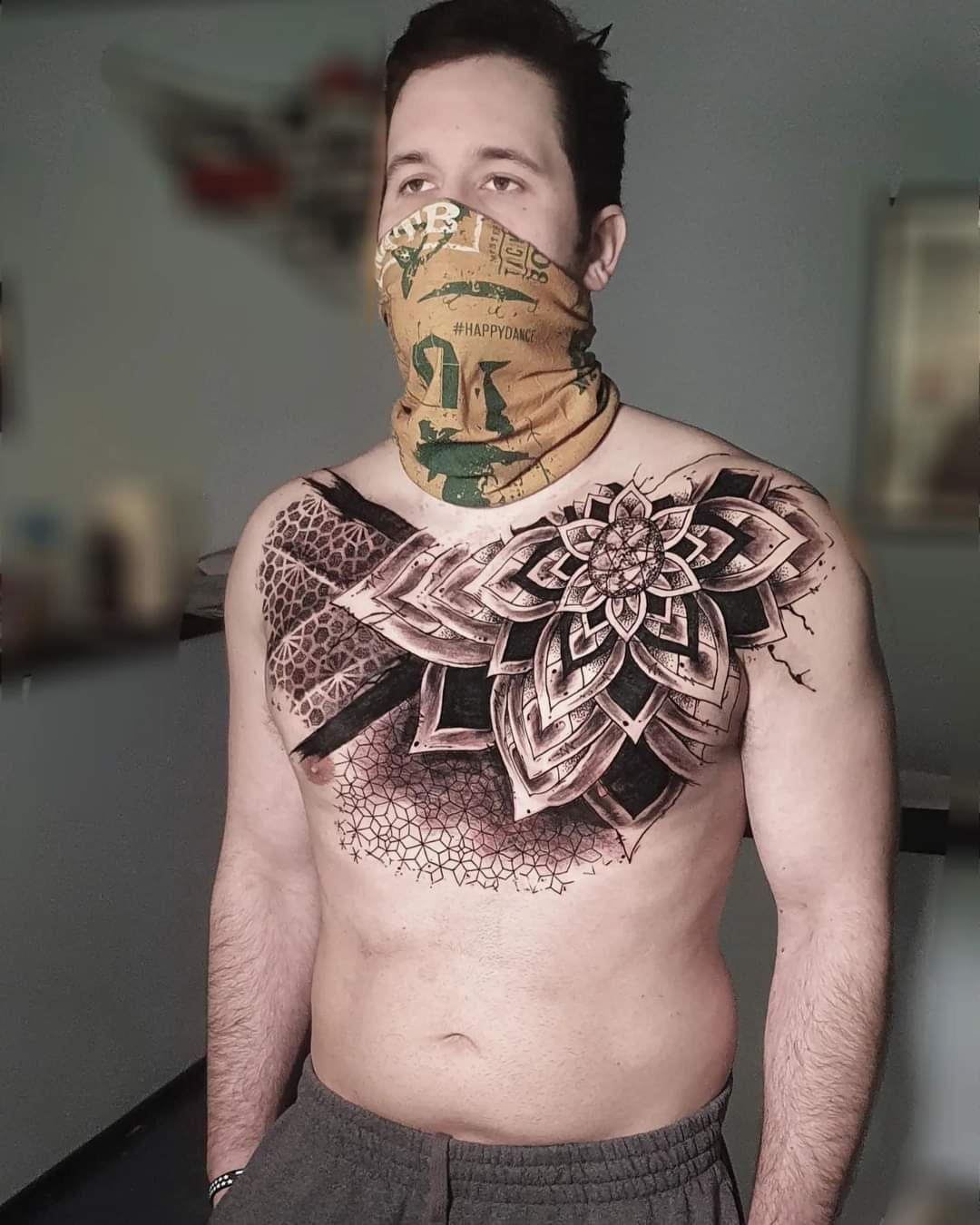
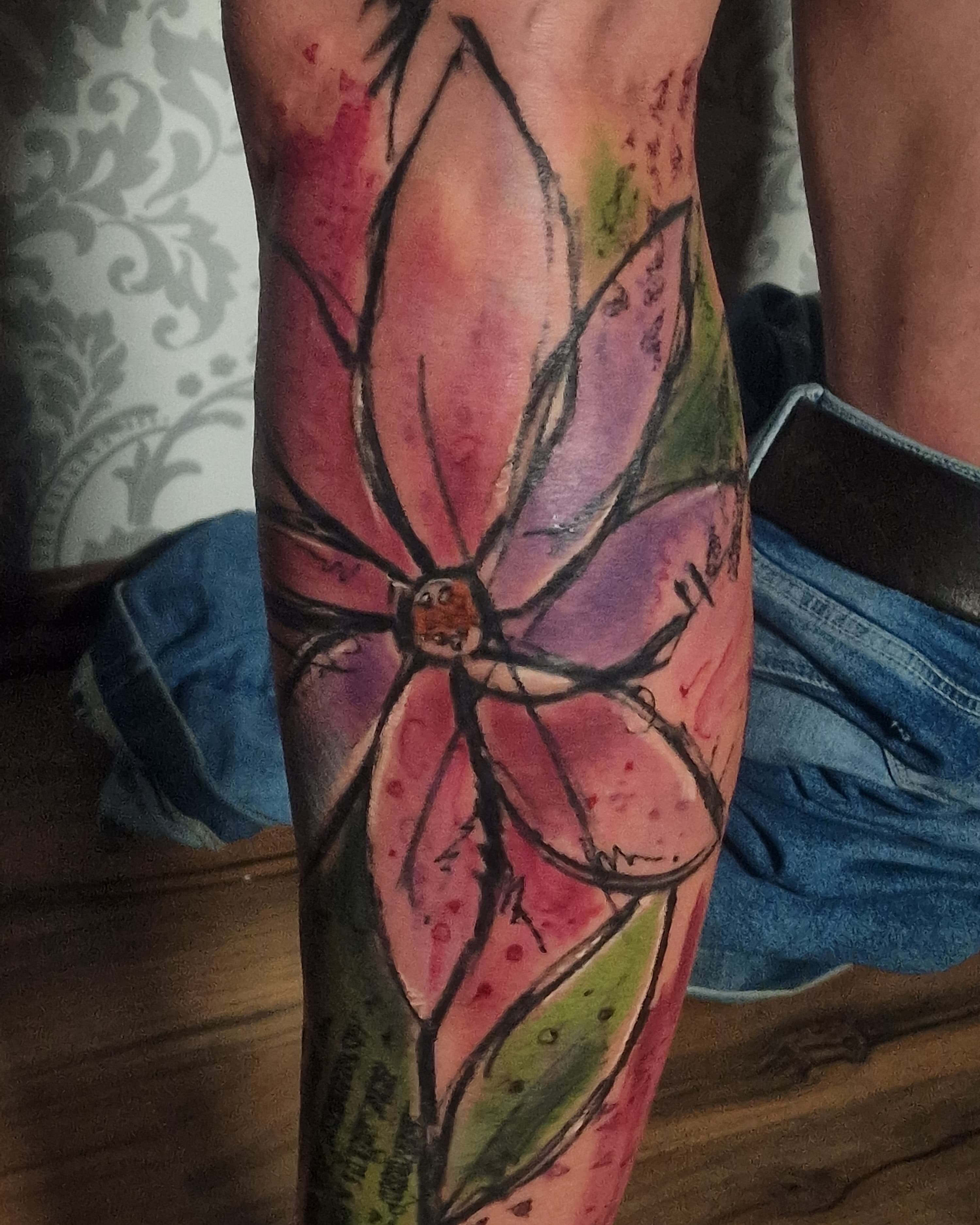
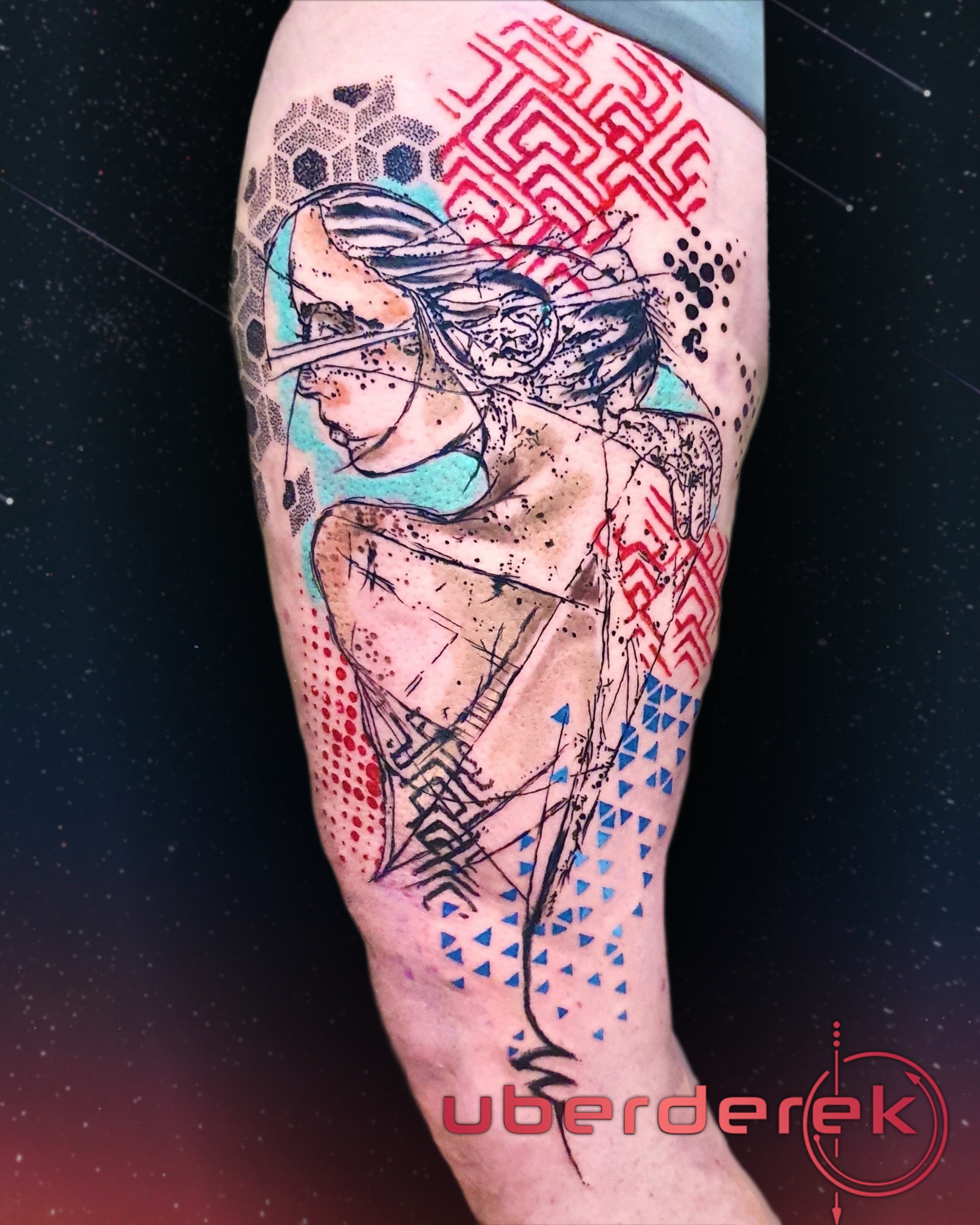
That question became years of work — fractured composition, sketch energy, painterly gesture, and controlled chaos, built specifically around the person and their story rather than reproduced from somewhere else. It's the throughline across everything from tattooing to painting to sculpture in my practice, and it's a large part of why my work has been recognized with awards like Best of Show at the DC Tattoo Expo and sponsorship from World Famous Ink, Hustle Butter Deluxe, and Cheyenne.
"Abstract tattoo" is a search term now. For me, it was just the work — for close to two decades.
Working Without a Reference Image
You don't need to arrive with a finished design. Bring an emotion, a memory, a symbol, a contradiction, a handful of references that don't quite fit together, or a vague idea you can't yet fully describe. I listen for what's underneath it, then translate that into my own visual language — abstract movement, sketchwork, geometry, blackwork, painterly marks, fragmentation, and color.
The result should feel unmistakably mine, but impossible without you. That's the actual definition of abstract work in my practice — not randomness, but interpretation built through real collaboration.
Selected Pieces


Common Questions
What does "abstract tattoo" actually mean in your work?
It means the piece is built through interpretation and collaboration rather than reproduced from a fixed reference image. The composition — fractured shapes, painterly gesture, geometric structure — comes from translating your story into my visual language, not copying a picture.
How do I describe an idea I can't fully visualize yet?
That's normal, and often the best starting point. Bring an emotion, a memory, a symbol, or even a contradiction you haven't resolved. The visual translation is part of what happens during the consultation, not something you need to arrive with already solved.
Were you one of the first artists doing this style?
Yes — I began developing this abstract, non-reference-based approach to tattooing in 2008, years before it became a widely searched style. That early development work is part of why I've been recognized with awards and industry sponsorships since.
Bring the Beginning of an Idea.
Every project starts with a free video consultation, wherever you are in the world. Based in Salzburg, Austria, with regular travel across Europe and the United States.