Geometric Tattoo Artist
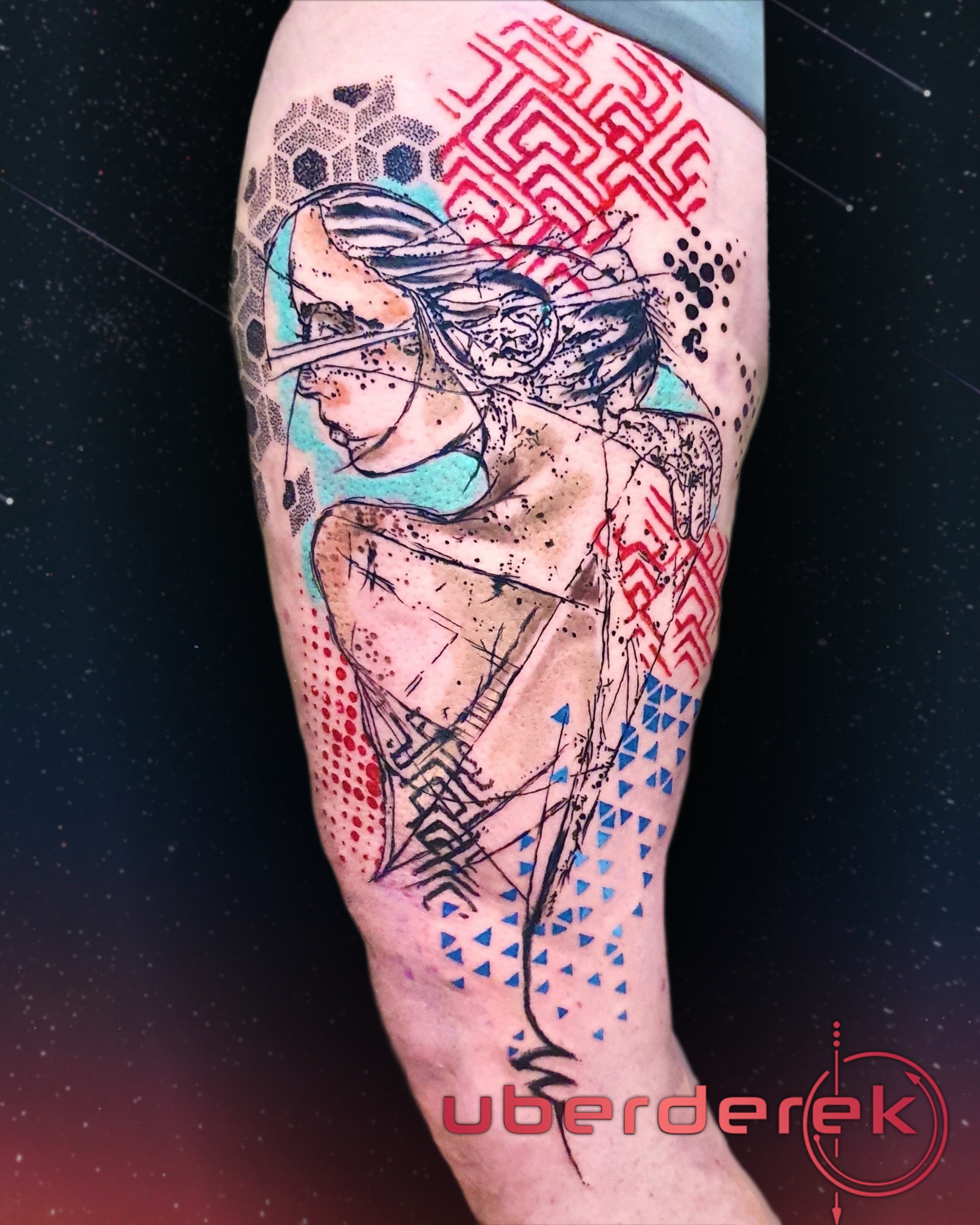
Structure is what keeps a painterly, abstract piece from collapsing into noise — geometric composition has been part of my visual language since I started developing it, not something added on top.
Structure Underneath the Movement
Geometric work in my tattoos isn't a separate style sitting next to the watercolor and abstract elements — it's the skeleton that holds them together. A loose, painterly piece without geometric anchoring tends to lose readability at a distance and lose its shape over the years. Precise structure is what keeps it working from across a room and up close, on day one and a decade later.
This is part of what set my early work apart, back when I was developing this combined approach: most artists doing geometric work kept it rigid and separate — mandalas, sacred geometry, pure linework. Very few were merging that precision with painterly color and abstract composition into a single cohesive piece. That fusion is core to what UberDerek has always meant.
Freehand Precision, Planned for the Body
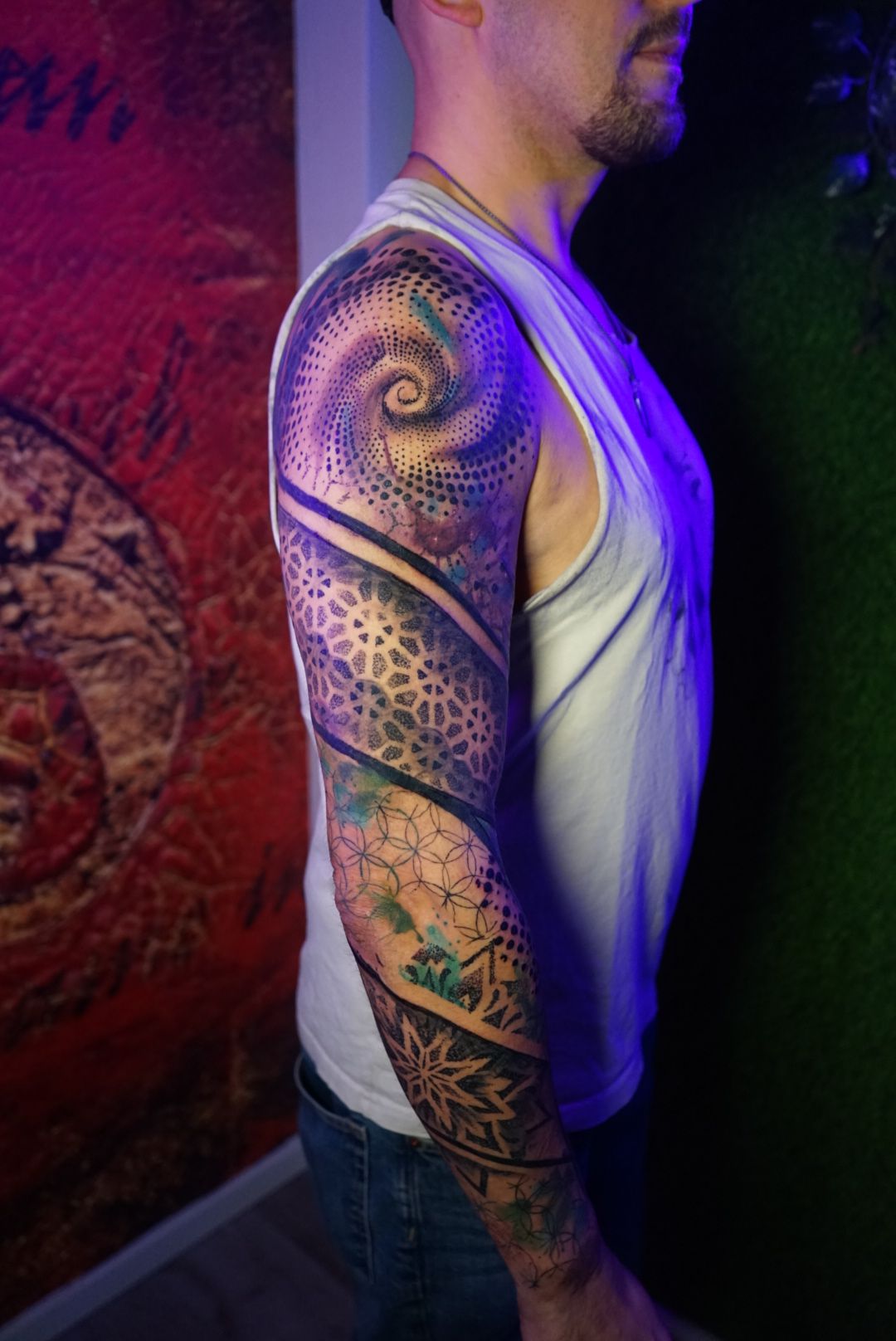
Geometric elements in my work are built specifically for the body they'll live on — proportioned to muscle, joint movement, and how the piece will read as the person moves, not just as a flat drawing. Some structure is planned with precision tools; a lot of it is refined freehand once the stencil is on skin, adjusting to the individual's actual anatomy.
For larger projects — sleeves, back pieces, multi-session work — the geometric framework is what makes the whole composition hang together across sessions, so the piece reads as one intentional work rather than a series of disconnected images.
Selected Pieces


Common Questions
Is your geometric work freehand or stencil-based?
Both. Precise structural elements often start with a stencil, but a significant part of the final linework is adjusted freehand on skin to fit the individual's anatomy and movement.
Can geometric linework be combined with watercolor or abstract color work?
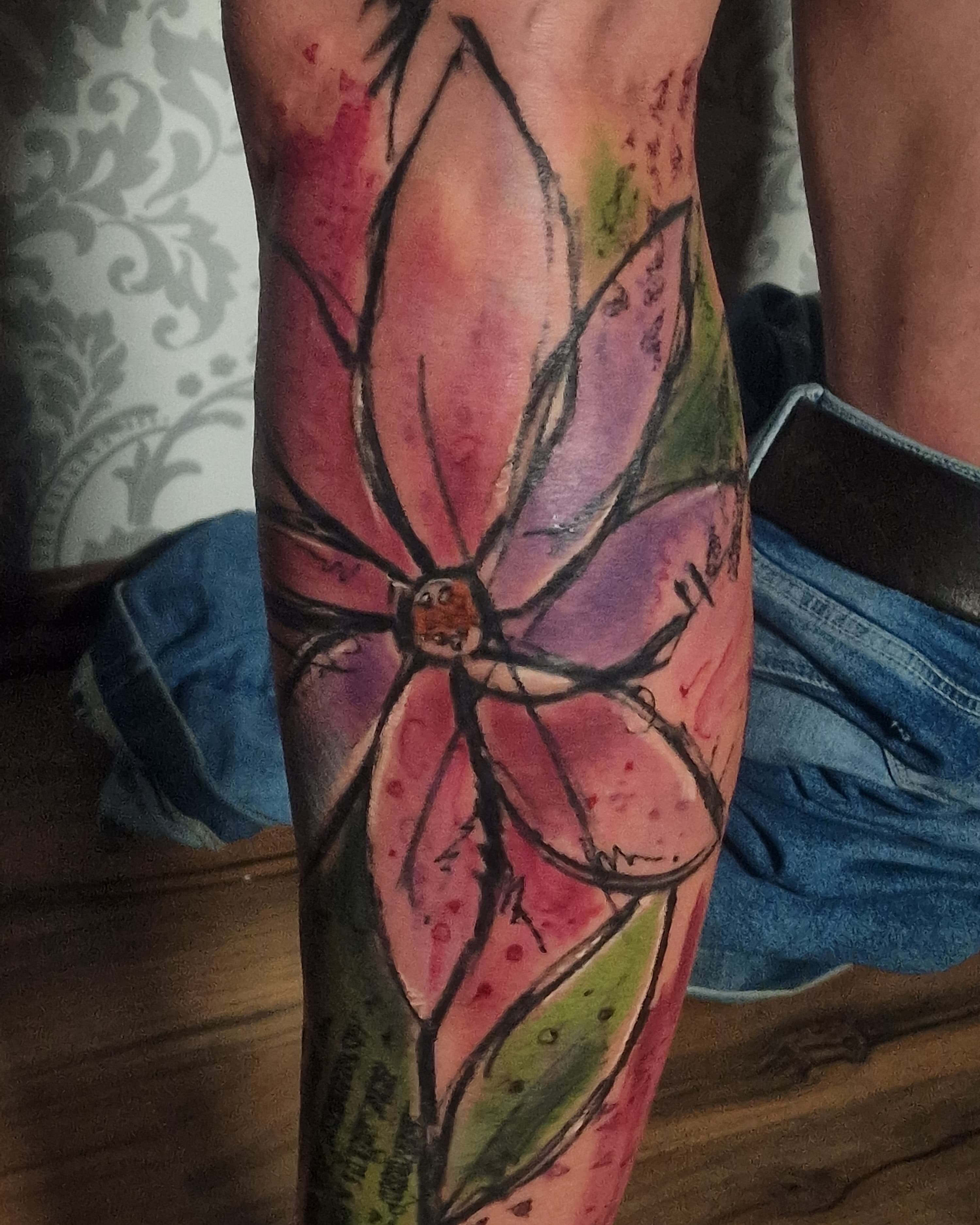
Yes — that combination is central to my watercolor work, not an exception. The geometric structure typically provides the framework that the more painterly, watercolor, and abstract elements build on top of.
How is your geometric style different from typical mandala or sacred-geometry tattoos?
Most purely geometric styles like mandala or sacred-geometry work stay rigid and self-contained. My approach uses geometric precision as scaffolding for a more painterly, abstract composition — a fusion I was developing before it was common in the industry.
Bring the Beginning of an Idea.
Every project starts with a free video consultation, wherever you are in the world. Based in Salzburg, Austria, with regular travel across Europe and the United States.